

Big Five Tours & Expeditions (Big Five), a Certified B Corporation, has released a “landmark” global study revealing that tourism remains one of the world’s most powerful—but persistently underestimated—drivers of employment and community development.
Drawn from eight months of research across more than 15 countries spanning Africa, Asia, and Latin America, the findings show that sustainable tourism generates an average of 35 jobs per booking, with nearly 20% of all jobs directly supporting local communities. In several destinations, community-based employment rises above 30%, demonstrating “the transformative potential of tourism when communities are intentionally integrated into the visitor economy.”
The study, which will be released annually moving forward, standardizes measurement of jobs created per booking, jobs per travel day and community-specific employment.

“This study makes one thing clear: tourism is not a peripheral sector. It is a major driver of livelihoods and a lifeline for communities worldwide, especially in remote areas,” said Ashish Sanghrajka, president of Big Five Tours & Expeditions. “An idea born from the pandemic, when tourism’s true contribution to global GDP was not being counted accurately, we developed a controlled, bias-free methodology, refined first in Peru and then across our core destinations around the world. Our key indicator should never be ‘how many tourists;’ it should be ‘how many jobs are sourced through tourism and most importantly, how many are committed to hiring responsibly from indigenous communities.’ They are the most important stakeholder in the equation.”
Several destinations illustrate the range of outcomes:
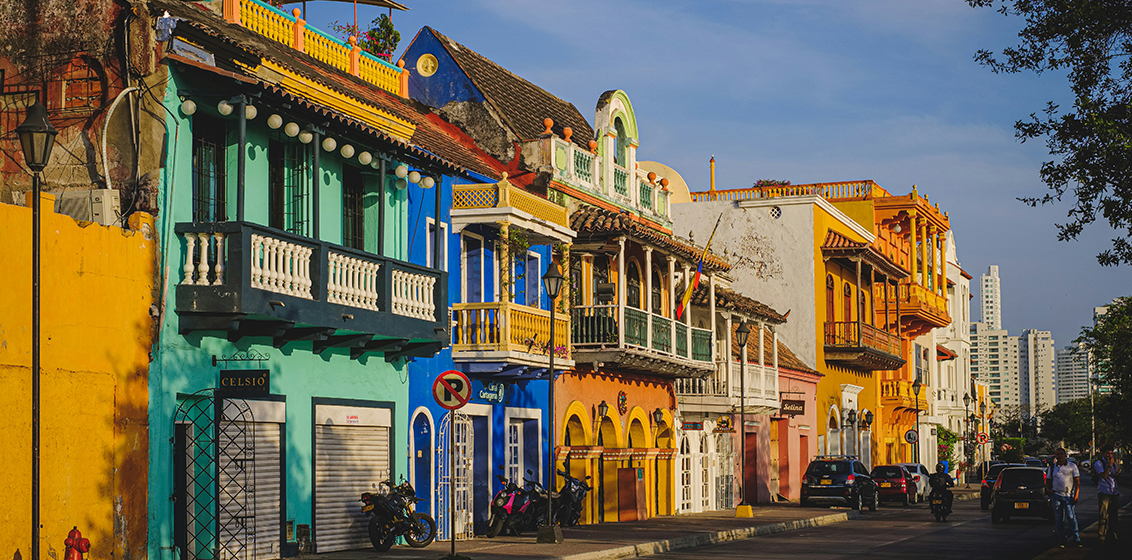
- Colombia stands out with nearly 40% of all tourism-generated jobs directly benefiting communities, driven by strong local ownership of nature-based and cultural experiences.
- Sri Lanka also demonstrates high community participation, with 31.3% of jobs flowing directly to local people.
- In Tanzania, safari tourism generates 73 jobs per booking, with more than a quarter supporting communities through guiding, conservation work and local services.
- Argentina and Egypt/Jordan generate significant overall employment — 8.8 and 21 jobs per booking, respectively.

To this point, Big Five said tourism’s potential to uplift communities depends on intentional policy, investment and community engagement—not on visitor numbers alone.
Added Sanghrajka: “Tourism is one of the only industries capable of creating diverse jobs in remote areas without large-scale infrastructure, but this potential is only realized when communities are part of the design, not an afterthought. Our findings show that when communities participate meaningfully, the economic impact is immediate, broad, and lasting.”
The study urges governments and development partners to recognize tourism as a core economic sector and to integrate tourism employment metrics into national planning. Recommendations include supporting community-led tourism models, expanding responsible access to remote areas, strengthening training pipelines for local talent, and ensuring that tourism strategies explicitly address community benefit and participation.

Methodology: The study draws on eight months of fieldwork and data aggregation from destinations across Argentina, Brazil, Chile, Colombia, Ecuador, Egypt, Jordan, Guatemala, India, Kenya, Tanzania, Morocco, Peru, Sri Lanka, Thailand and southern African regions including South Africa, Botswana and Zimbabwe.
Employment impacts were measured using a standardized framework that calculated direct and indirect jobs per booking, jobs per travel day, community-specific employment, and the distribution of work across accommodation, transportation, restaurants, communities and other sectors. Data included on-the-ground sampling, operator reporting, local enterprise inputs and destination-level analysis, allowing for consistent comparisons across regions and tourism models.