

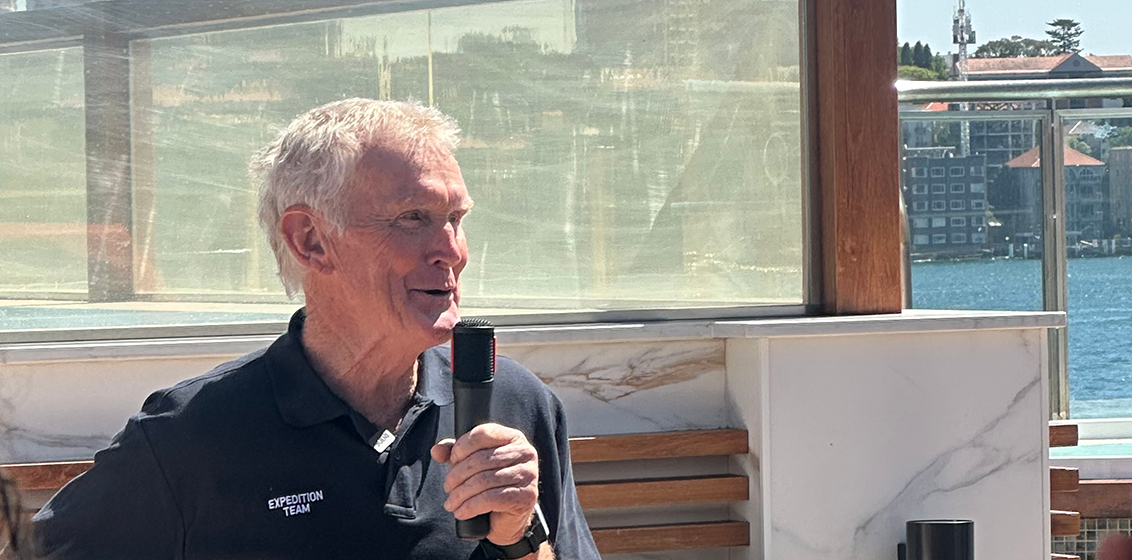
Aurora Expeditions is entering what Co-Founder Greg Mortimer has described as “Version Three” of its operations – a stage that prioritises environmental responsibility while continuing to offer intimate, adventurous travel experiences.
“We are on the edge of Aurora Expeditions, Version Three, which is an increasing understanding within the company of our need to seriously care for and look after our environmental footprint,” Mortimer said. “And we know that as an industry, it’s a slow train speeding up. We need to be taking care of our environmental footprint as an industry by serious application.”
The concept of Version Three reflects Aurora’s evolution from a small start-up in the early 1990s into a global leader in polar travel. Initially built on adventurous expeditions aboard former Russian vessels, the company was sold in 2008.
“The new owners have managed to maintain the core of business heart and grow it and build it to a world company now with three state-of-the-art extraordinary vessels. That’s quite an achievement,” he said.
A defining feature of Version Three is the integration of sustainability with client engagement. “We’ve realised we have an incredible resource in our client base,” Mortimer explained. “If every person that we travelled with went home and increased their awareness by 50%, well, it’s pretty straightforward in that way.”
By educating travellers on the environmental impacts of their journeys, Aurora aims to amplify its influence beyond the expeditions themselves, making every voyage part of a broader sustainability mission.
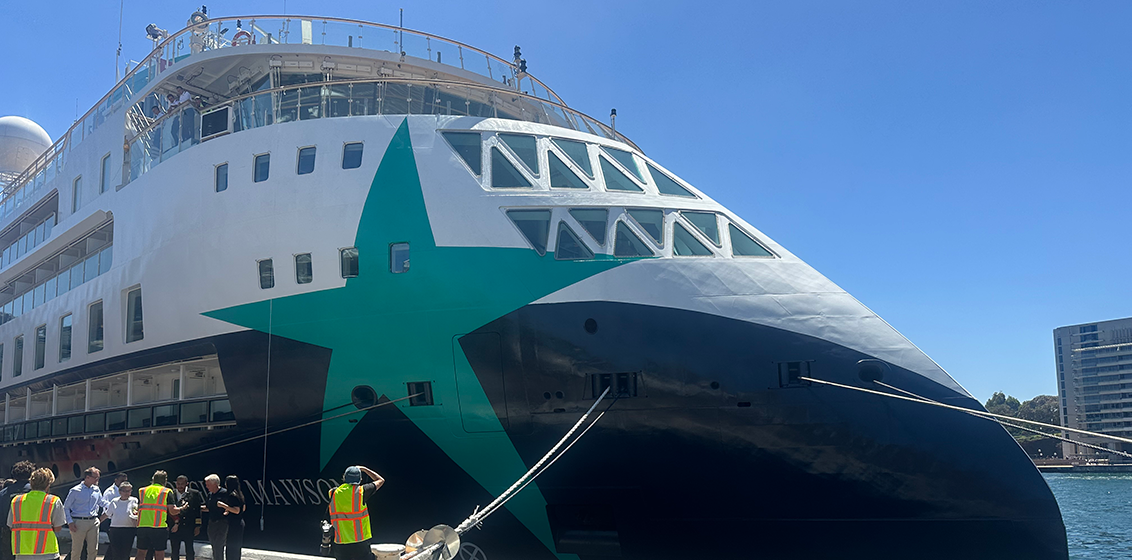
The company’s new fleet reflects this commitment, incorporating technologies to minimise emissions and reduce ecological impact, with its newest addition Douglas Mawson featuring some important advances on this front. “Version Three is playing…It’s pretty exciting,” Mortimer said, signalling a future where commercial growth and environmental stewardship coexist.
Aurora’s approach also preserves the personalised, exploratory experiences that have defined the brand from the start. “Our greatest fear was, how do you allow a travel business, which is so intimately connected to its client base in the most remote places in the world, how do you build that? How do you grow that and maintain that core philosophy of intimate contact with individuals, people, not numbers?”