

New data released by Visa based on the spending data of travellers suggests 2026 will be “a little more difficult in most markets” around the globe, however high net worth (HNW) individuals are continuing to spend on luxury holidays.
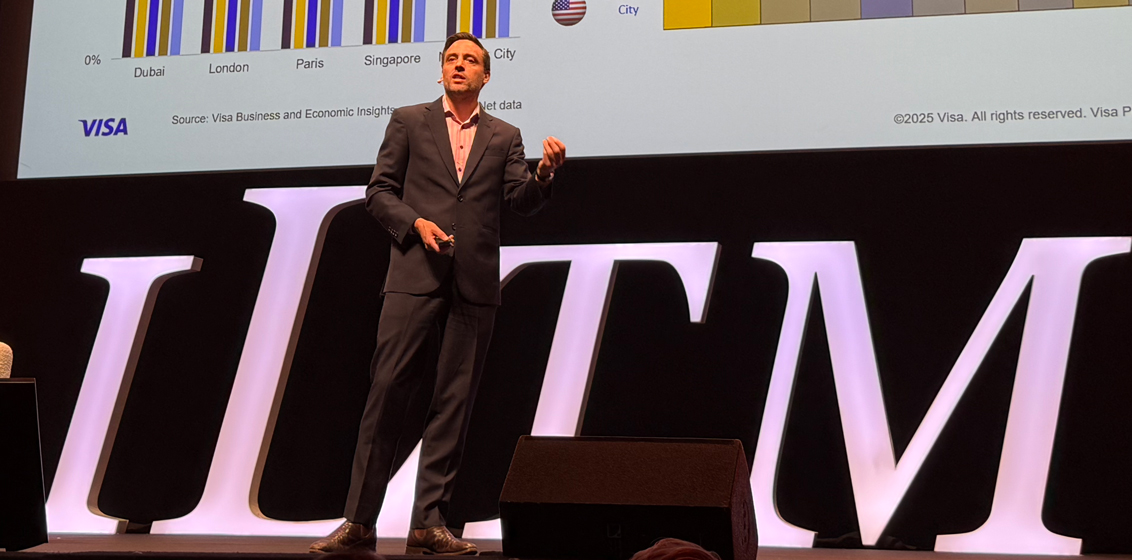
Simon Baptist, Principal Economist for APAC at Visa told delegates of ILTM Cannes the overall picture for the year ahead indicates a slow down “as geopolitical tensions, supply change changes and high interest rates have an impact.”
Baptist discussed key economic and geopolitical factors trends across the world, new directions and trends, and the driving forces behind trends affecting luxury travel, based off credit card transactions of the mass market, affluent and HNW individuals.
The data suggests the US will accelerate slightly compared to last year after a sluggish first half in 2025 as markets showed concern by Trump’s trade war and tariffs. “With that having reached a more settled phase for 2026, the US will be improving somewhat,” Baptist said.
Visa’s report highlighted the biblical impact that AI is having on the global economy.
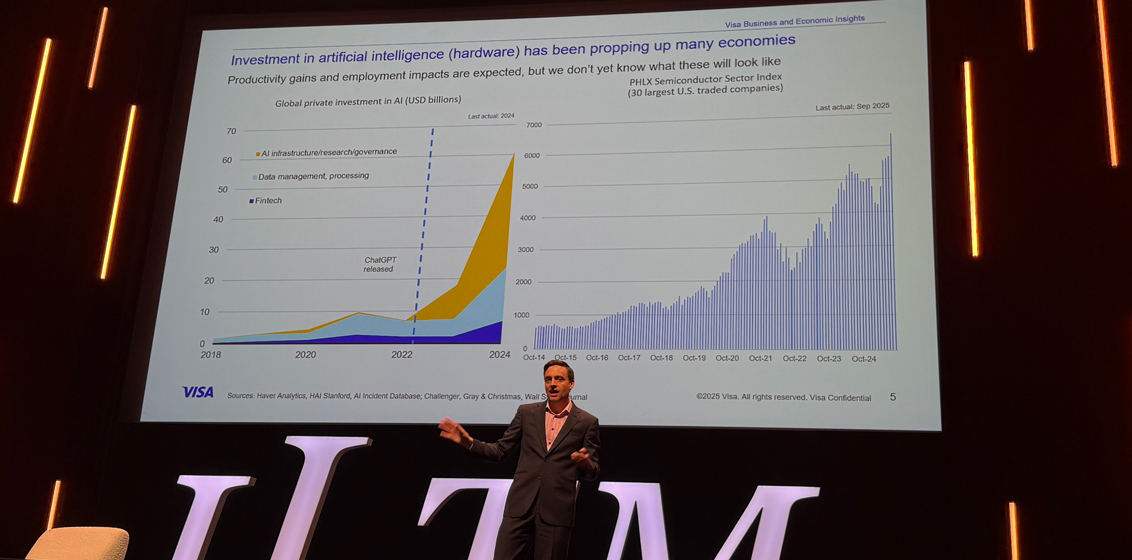
Visa’s graphic above shows the massive boom in 2024 of AI infrastructure, research and governance.
The explosion in hard investment and infrastructure in artificial intelligence is impossible to ignore, with Baptist saying it’s AI hardware that is driving the global economy in destinations such as Taiwan, Malaysia and South Korea, as well as the global stock markets.
Booming stock markets means its “a really good time for the affluent.” Citing Visa’s data, he said that over the past five years, transactions on mass market cards has been close to zero. On mass affluent cards, growth has been 7% over a five year period, whereas on HNW cards it has been a huge 15%.
“So really, all the growth in consumer spending in the last five years is coming from high net worth cards and mass affluent. The mass market is quite challenged and top end is doing really well, and strong growth in capital markets is part of this.”
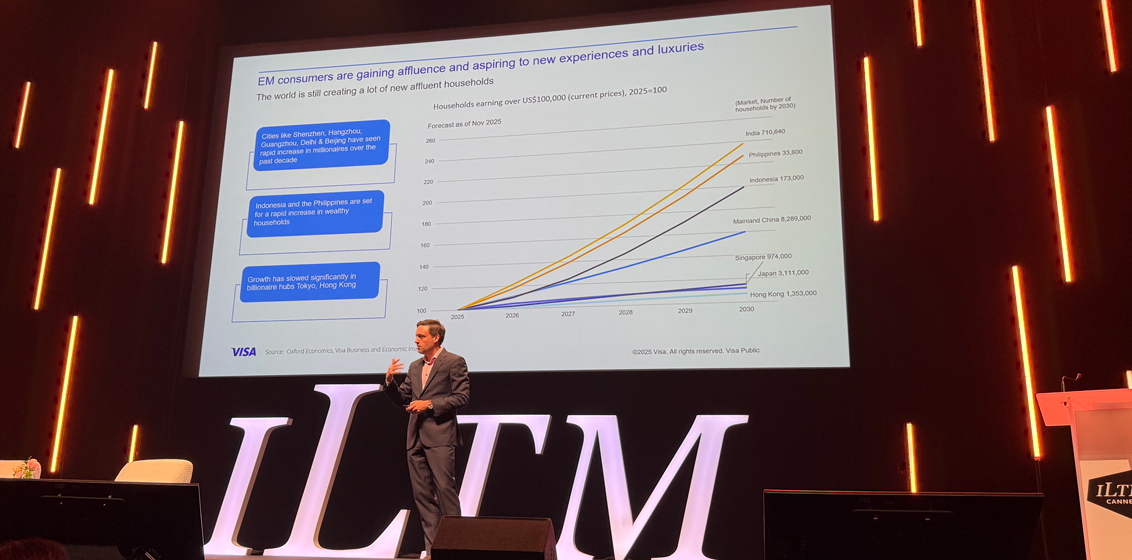
India, the Philippines, Indonesia in the Asia Pacific region are expected to have some of the fastest growth rates in the number of new affluent, pending political stability.
The key destinations where luxury cardholders are spending is Dubai, Paris, Singapore and New York.
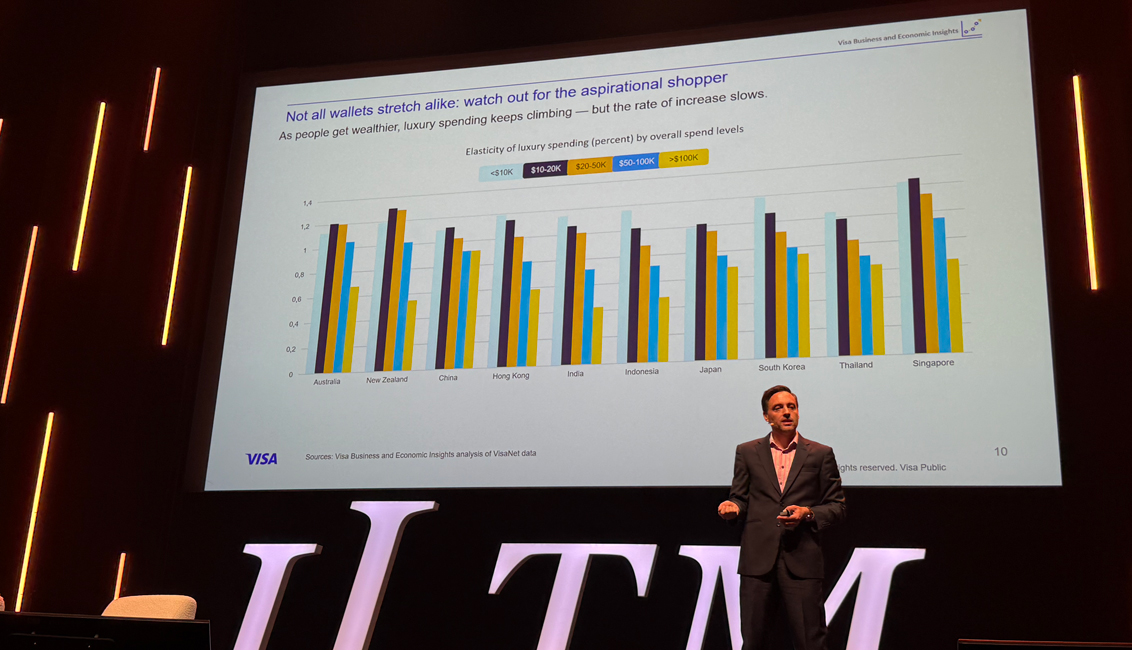
“We see in markets like Singapore, New Zealand, Australia that there is a high sensitivity of luxury spending at the lower levels of the spending chain. So the mass affluent in those markets, if they have a bit of spare cash, they are quite inclined to spend it on luxury items,” Baptist told ILTM Cannes delegates.
Spending on affluent cards is about three times higher than spending on the non-affluent.
Baptist also highlighted “really fascinating generation element”. In relative terms, boomers and Gen Z are doing the spending. Boomers are spending the most, accounting for 40% of affluent spend, but they only account for 12% of actual households. Whereas the affluent boomer households are out spending, spending 4 times more than their share in the affluent market.
He said there are a lot of affluent Gen X’ers but they account for a small share of spending. They have the money, but they are less willing to let it go. That trend is also shadowed by Millennials. On the other hand, there are less Gen Z’ers (because they are younger), but they are out spending, the Australian data cruncher said.
“Potentially, it’s frustrations with lack of possiblitly of getting into the housing market, worries about the job market leads to less focussed on future savings and fiscal prudenece, and more of I’m just going to spend and enjoy now attitude, because I’m never going to afford a house anyway, so I might as well enjoy what I’ve got,” Baptist said.
It’s the Boomers and the Gen Z’s, in relative terms, who are more inclined to spend.
Discussing destinations where people are travelling, Baptist noted a “big increase in inbound travel to the Middle East, and a really strong inbound into Japan” (due to the value of the Yen).
The lack of return of outbound Japanese travellers due to price pressures, and the lack of return of Chinese travellers because of politics and a shift in domestic tourism, are having a big affect on outbound markets, which he says “haven’t recovered, creating one big global impact”.
Inbound travel to the US is a weak spot, with visitation down from Canada, from Asia Pacific and Europe, whereas growth is strong to Japan and the Middle East.
Baptist drilled down on the outbound slump in travel from China – viewed as “such an important part of the global travel industry”.
In the decade up to 2019, China is where all new revenue was coming from,” he said.
“We could just guarantee the arrival of more and more Chinese visitors every year, and they had the money to spend. In 2019, Chinese households were spending almost as much on foreign holidays and sending kids to universites abroad as China was earning from its trade service. But the Chinese government preferred the money to stay at home, hence we see this shift, exacerbated by COVID, back into domestic travel. That’s been a big change to the global travelling landscape.”
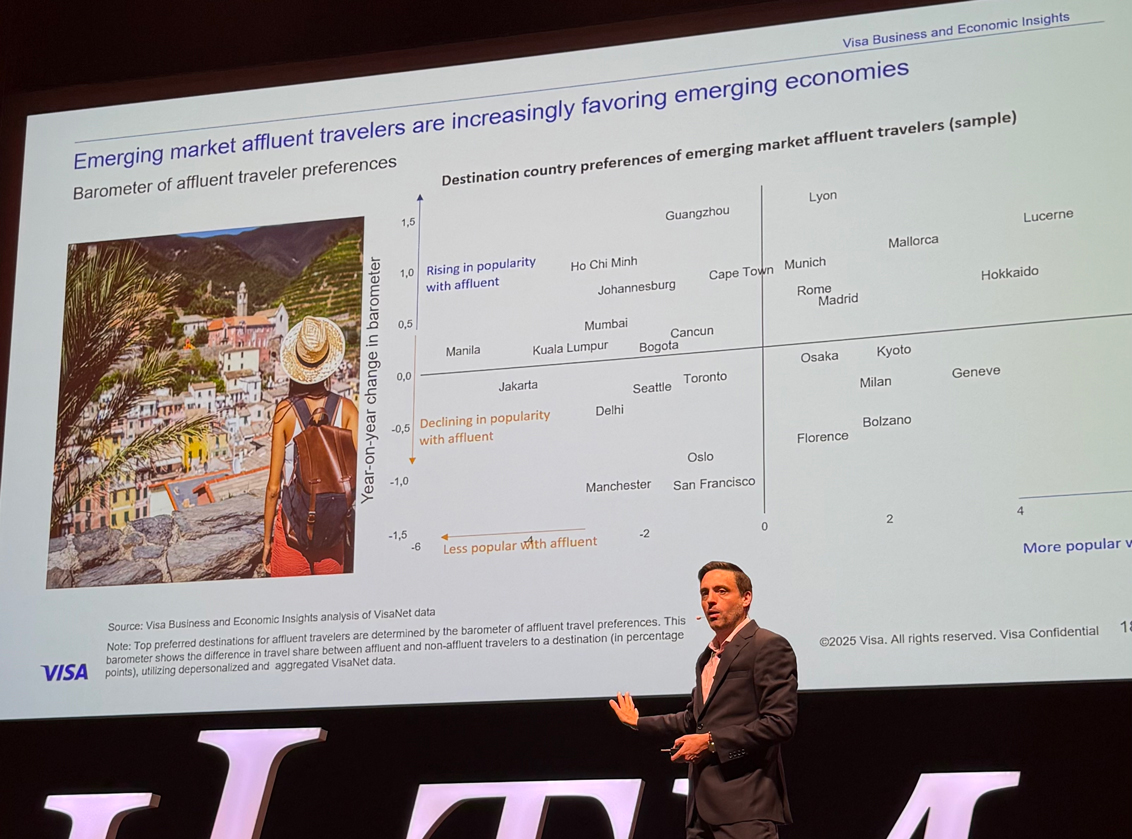
Destinations that affluent card holders are travelling include Lucerne, Hokkaido, Geneva, Kyoto, Mallorca and Madrid. More affluent travel is heading to locations like Ho Chi Minh City, Mumbai, Manilla and Bogota.