

Aurora Expeditions is trialling a new navigation technology aimed at reducing fuel use and emissions, partnering with Australian start-up CounterCurrent on what could become one of the industry’s most significant innovations.
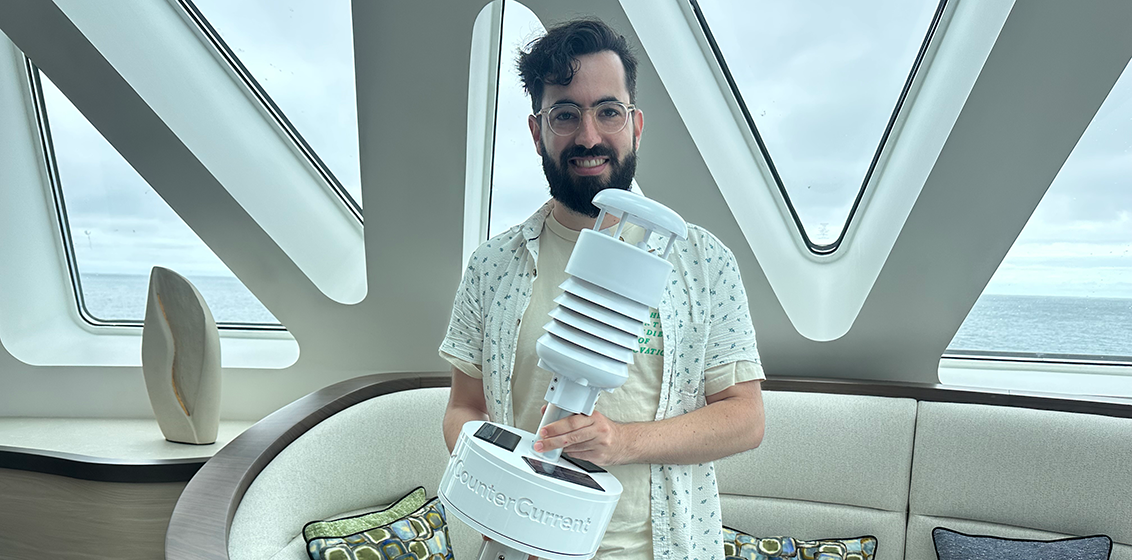
CounterCurrent’s system combines real-time sensor data, AI modelling and advanced ocean current forecasting to recommend safer, faster and more fuel-efficient routes, similar to the way Google Maps optimises road journeys. As CounterCurrent’s Tom McMenamin explained during a presentation aboard Douglas Mawson: “We aim to be Google Maps of the sea.”
Prior to the brand new vessel’s departure from Sydney for its shakedown cruise, the CounterCurrent team installed its custom-built Trident weather stations on the Douglas Mawson. The dual-sensor approach allows the system to detect minute differences in ship motion and water resistance, helping calculate optimal routing with unprecedented precision.
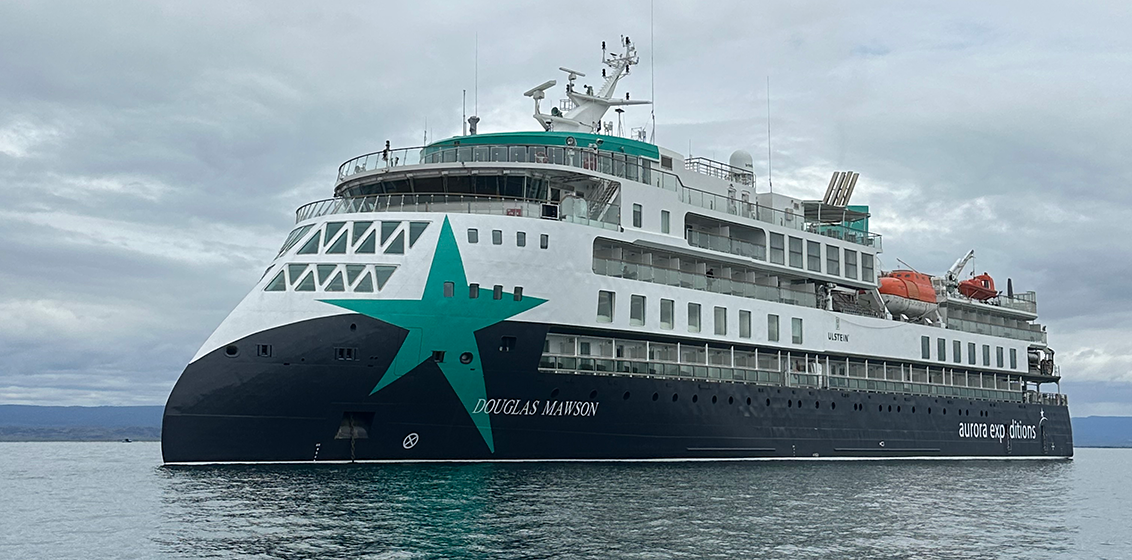
Traditional shipping routes follow straight or “great circle” lines that often ignore the complex patterns of ocean currents. The CounterCurrent system instead uses real-time modelling and ensemble forecasting. “What we’re looking to deliver is a dynamic navigation optimised vessel route using a combination of low-cost onboard sensors and an AI digital twin of the ship and the route,” McMenamin explained.
A major breakthrough enabling this innovation has been the massive improvement in satellite data in recent years. “There’s been a 10 times increase in resolution of satellite information and ocean current forecasting… we can actually see currents that we couldn’t see before,” McMenamin said. These high-resolution insights allow subtle route adjustments, more like “changing lanes” than entirely rerouting a voyage, reducing resistance and saving fuel in the process.
The system continuously evaluates multiple forecast scenarios. “We don’t just run one forecast… we say for the wide range of potential outcomes, what is going to happen,” McMenamin said, adding that only routes that show consistent advantages across a majority of models are recommended to the captain. The goal is decision support, not automation. “We’re never going to tell anyone what to do. We’re going to provide information in an intuitive way… for them to make the decision themselves.”
Aurora’s Douglas Mawson is the first expedition vessel to test this technology in real operating conditions. The implications, however, extend well beyond a single ship. “The currents that we are mapping… these can apply from Ushuaia to Antarctica,” McMenamin said. “These are savings that can be multiplied across all Antarctic vessels.”