

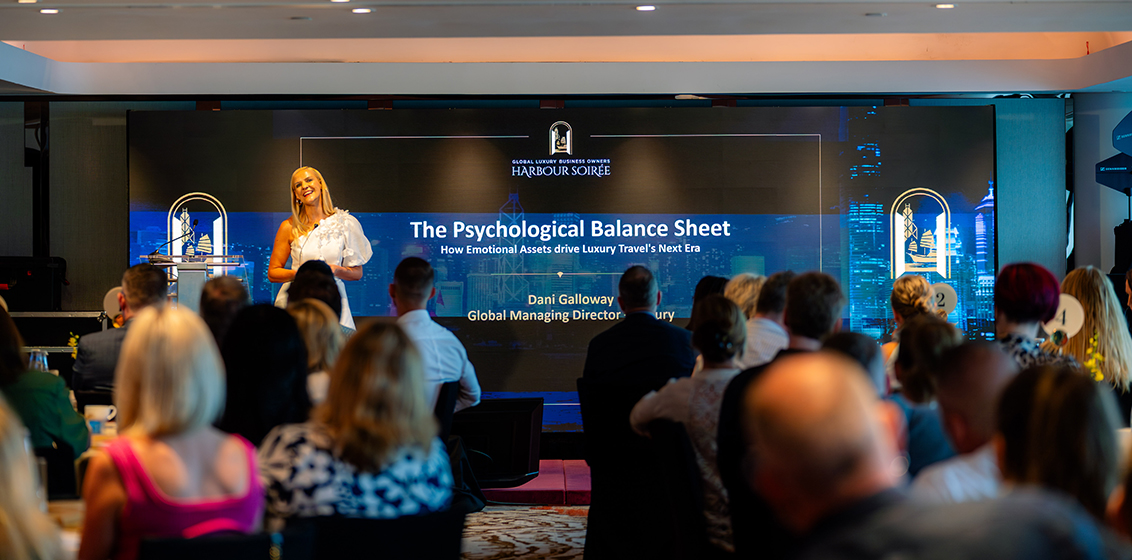
Travel agency business owners of the Luxury Travel Collection have been encouraged to hone their knowledge on their “psychological balance sheet” in order to help steer future growth.
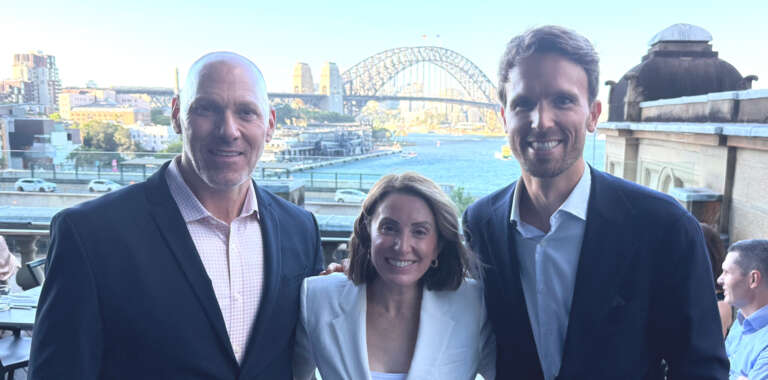
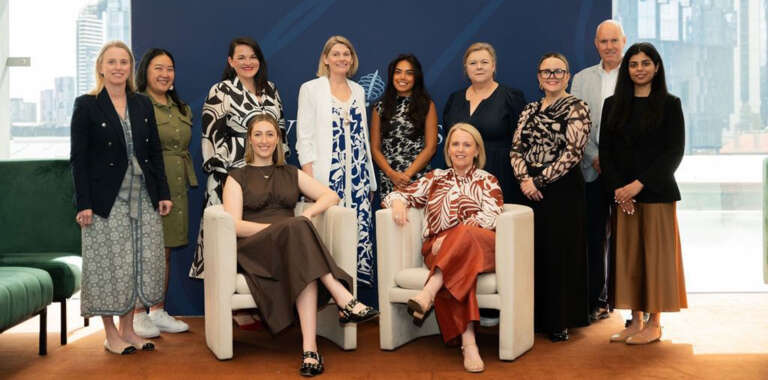
Speaking at the Luxury Travel Collection’s Global Luxury Business Owners Harbour Soirée in Hong Kong last week, Danielle Galloway, Global Managing Director of Luxury & Independent, Flight Centre Travel Group, said that for the “high performing community” to continue to prosper, it was key for owners to embrace much more than a P&L reporting.
Before joining Flight Centre Travel Group in the corporate travel space and now luxury travel segment, Galloway worked as a chartered accountant for Deloitte for many years. Galloway’s background in accounting has enabled her to “combine her roots in finance, and [her] true passion, in luxury travel.”
She explained that the psychological balance sheet indicates future performances, similar to a financial balance sheet.
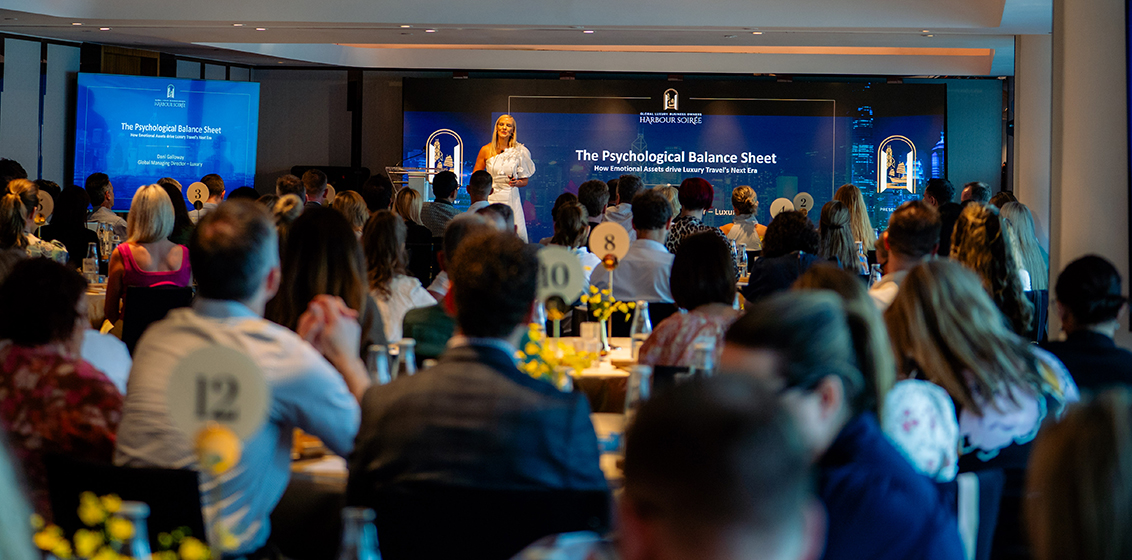
“Every leader can read a profit and loss balance sheet reflecting what has happened. Whereas a psychological balance sheet will show you what’s about to happen,” she said.
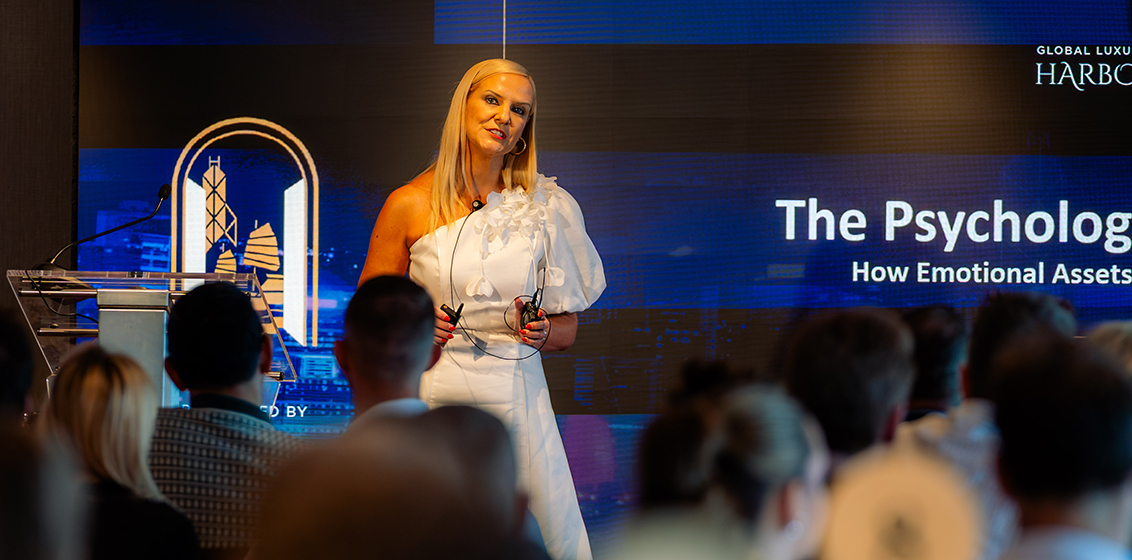
Galloway explained to LTC’s members that they should apply a strong focus on increasing their “emotional assets” in the balance sheet, centred around four key areas – trust, recognition, vulnerability and memory equity.
On the topic of recognition of assets, Galloway said agency owners should be “turning their service mentality into a soulful connection. It transforms a trip into a memory, a client to into a lifetime advocate.
“The deep intelligence that you have about your client will hold your clients for a lifetime. It is the most differentiating leadership strategy you can have in business.”
She highlighted how trust is established through anticipation, vigilance, transparency and integrity, and stressed the significance of understanding clients’ emotional patterns and family dynamics.
Examples of which were knowing the kinds of wine a VIP client may prefer, what brings them happiness, the setting they prefer for relaxation or in transtion, and knowing key milestones, such as family birthdays and anniversaries.
And, “integrity over incentive. Trust capital grows when leaders choose people over profit.”
“Dropping a high commission hotel due to a declining service. Don’t just do it, tell your clients that you’ve done it. That is building trust. It’s a reminder that short term commission is never worth long-term erosion of trust.”
“In luxury travel, trust is the most valuable asset we own.”
“Anticipation is authority. Leaders don’t wait for problems, they pre-empt them.”
“Trust grows in the quiet hours,” she adds. “The things that happen after hours. The ‘Midnight Guardian effect’ doesn’t mean being available, but being unseen and indispensable.”
She noted a “trust recession” in the travel market, with 73% of travellers distrusting online reviews.
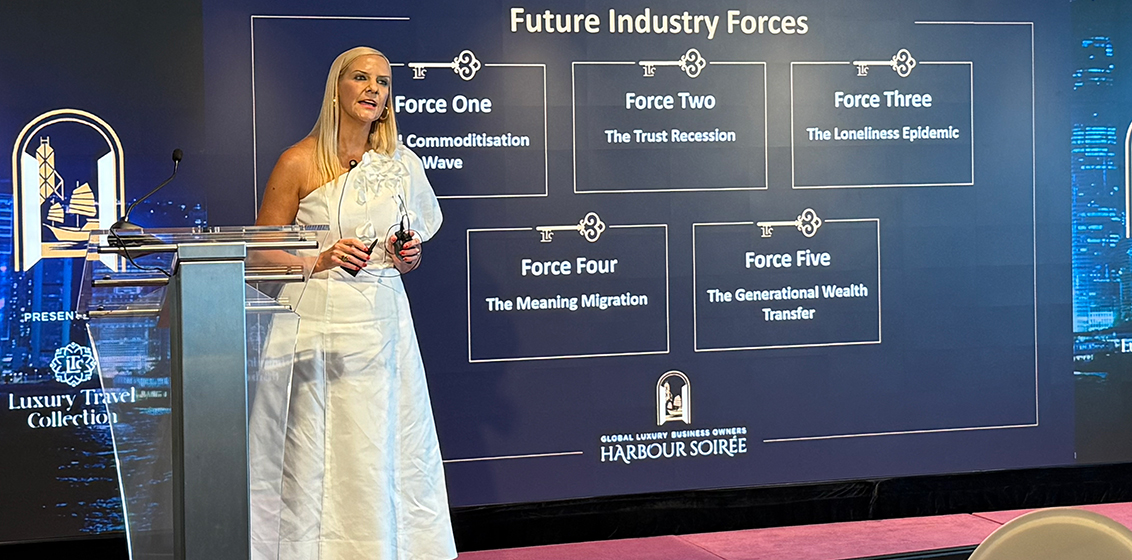
Galloway also underscored the value of vulnerability in creating deep connections, and the necessity of storytelling to differentiate from AI-driven services, stressing the need for emotional intelligence over information intelligence.
Her detailed presentation concluded by warning against the liabilities of perfection, meaningless luxury, and stagnating excellence, advocating for experiences that resonate emotionally and transform clients.
“Your future success belongs to those who also ask, who also achieve, not just the financial success, but are setting their financial success up in the future by mastering psychology.”