

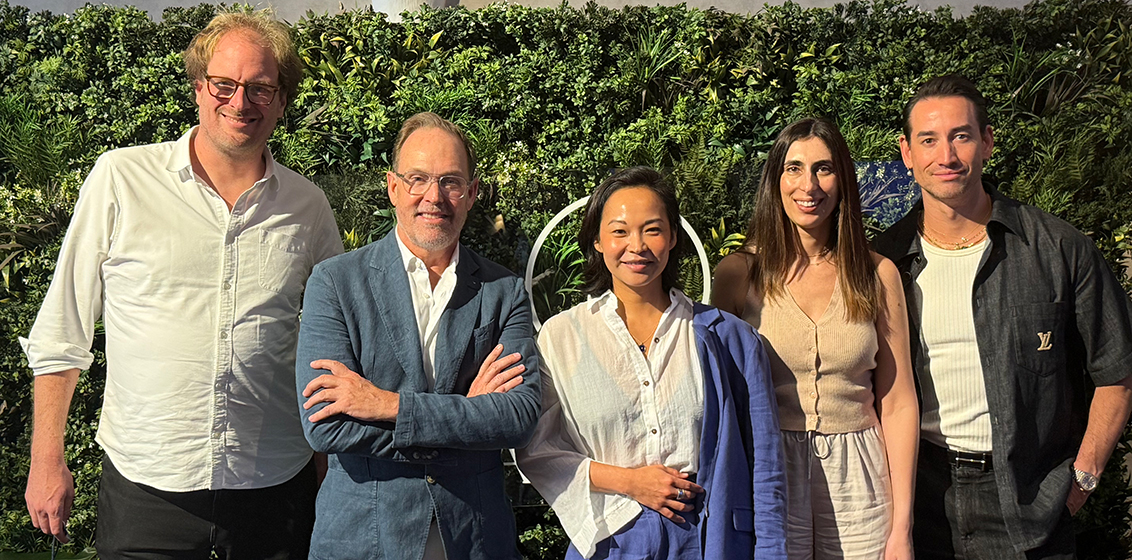
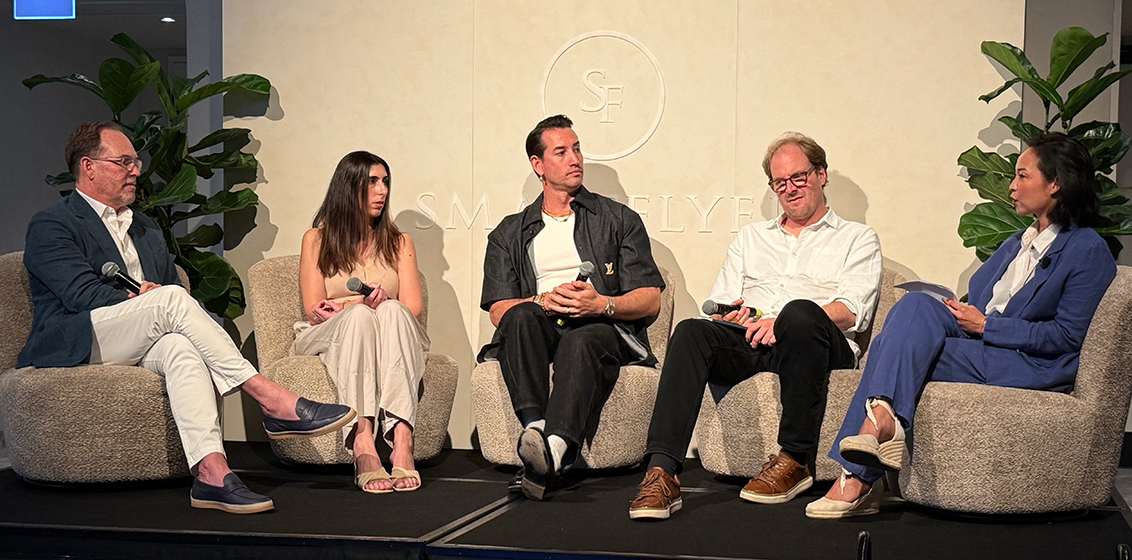
Last week’s SmartFlyer In Residence conference at the newly minted Mondrian Gold Coast included a panel discussion of travel advisors, providing insight on trends, trust, Tik Tok (and other social media), slow travel and more. The talk was moderated by SmartFlyer’s Chief Operating Officer, Erina Pindar, with four leading ‘Smarties’.
Brent Wallace, Co-Director of SmartFlyer Australia says client travel patterns were “much more predictable” 10 years ago compared to today.
“I knew when my clients were going to book. I knew when they were going to go. It was like clockwork. You know they would book six months out to Europe, Saint Tropez, same place, every year. Ten years later, you just get everything. It’s like a mixed bag!”
“Things have changed dramatically in the last 10 years. How people book, what they book and lead up time to a booking. It’s all last minute now.”
Pindar says; “You’re the clients’ trusted friend who happens to know everything you need to know about travel.”
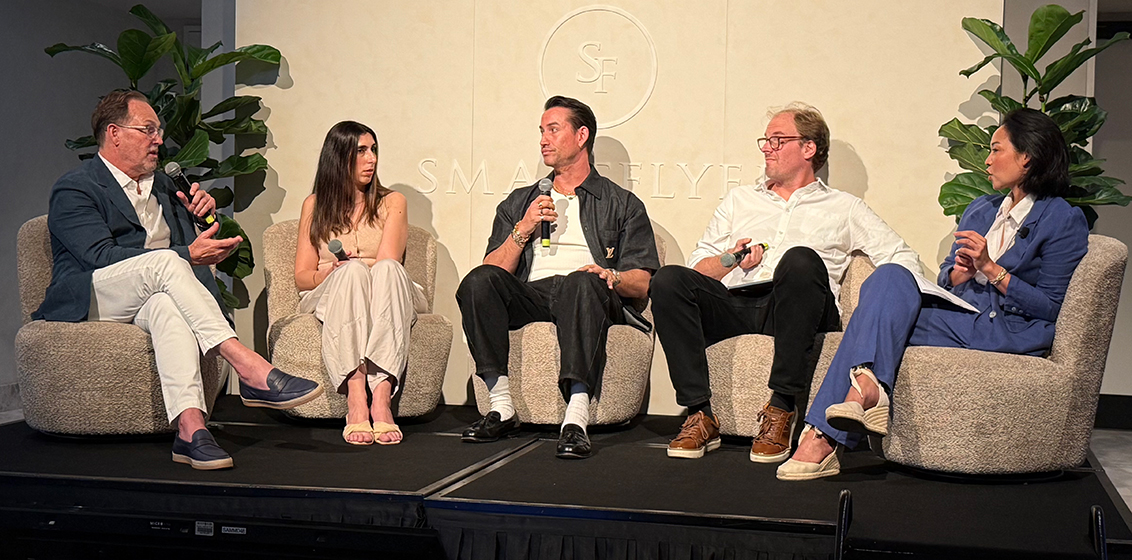
Gloria Gammo of GG Inspired says her clients value the ability to be able to speak with her at any time of the day, versus bricks-and-mortar agencies
“The client now wants someone that they can call at any time, and we are that for them. And that is not what happens in traditional travel agencies. They may have a 24-hour back-up system, whereas we are the 24 hour back-up system. It is unfortunate for us, but is also a good thing, as new client bookings can be very last minute.”
Gammo says its now reached a point where she doesn’t do much business via email any longer.
“My business is now down a lot by text – WhatsApp, Instagram.” She admits it may be more challenging to manage “but that’s just how it is.”
“I literally send quotes to my clients on text, and they’ll approve on text. But it’s very quick. They come up with an idea and you have to act upon it, and that is vastly different to 12 years ago. When I started, the client walked into a store and you would sit down and consult.”
“Now, half of my clients, I don’t see them, I don’t have face time with them, and it’s just so different.”
Pindar quizzed the panel, that thanks to AI (artificial intelligence), Tik Tok and social media, travel space is “so noisy” with advice from so called “experts everywhere,” and asked how the panelists cut-through the noise to show their value.
Lionel Brown, from Huntington Brown Private Travel in the UK says trust plays a big part, noting his clients are “almost like friends and family as you know them so well.” He said he challenges clients who bring in reviews and opinions of holidays shared on social media, asking ‘who are those people, what demographic are they, what level of income they may have?’.
“You’re going to base the whole trip around someone you don’t really know and their opinions?”
“It comes back to trust. As a luxury travel advisor, you’re well travelled. You know the product, you know the new hotels. You’ve got the client feedback, you’ve got the insights, you’ve got the SmartFlyer community to run ideas past, etc,” Brown said.
On the topic of trip planning and pacing, and how to maximise client’s enjoyment on holiday, Gammo recommends at least three nights in each location when she prepares itineraries. Taking out the arrival and departure experience, that’s really only two days in a destination.
“Everything always looks good on paper. I always get my clients to visualise their journey. If they’ve booked three night in Paris, that’s only two days of sightseeing. Is that enough?”
“I try to get them to slow down.”
She says there will always be the new clients that want to “bounce” all around Europe in six weeks, taking in as many destinations as they can. “Once they’ve done that, they’re ready to do one place, one country at a time.”
Brown and Gammo also say they endorse the rise of luxury rail journeys and transport for “slow travel” experiences for clients that “take the stress factor” out of visiting another airport.
Brown adds that trips are longer because clients are taking their time, now spending four or five nights maybe in the Dolomites on an itinerary through Italy, and in Bavaria on a German journey, to immerse themselves in the destination.
“Before Covid, I think trips were a lot shorter, and now people are taking their time.”
Ash Chin of Sojourns Of, says he’s now building “breaks on trips” as part of longer multi-week journeys. That encompasses a few days of relaxation in a location, with little to no activities scheduled.
Chin used an example of a group of ladies traversing India with busy days of multiple experiences. To break the “intensity” of the trip, the group has taken a buyout in the countryside, “in the middle of nowhere, with zero activities planned, to just have a reset, to enjoy the moment, and to carry on a few days later.”
More content from SmartFlyer Australia and the panel discussion later this week exclusively in LATTE.