

Editor’s note: This is Part 1 of a multi-part series exploring the LGBTQIA+ travel market – including why it matters, how to authentically engage and serve these travellers, what they’re looking for in their journeys and beyond.
It’s sad that I have to be writing this series. I take that sentiment from a travel advisor I recently spoke with about how to sell LGBTQIA+ travel; they said, “it’s kind of sad that in this day and age that you and I are even having this conversation.”
What that advisor – and I – mean by this is that people are people and that a story such as this should only have to consider trends or popular destinations, the way one might write a story about family travel, bachelorettes, wellness. You name it. Instead, a story on LGBTQIA+ travel would be remiss should it omit the glaring challenges these travellers face in destinations across the globe, causing it to be significantly less safe for them than their heterosexual/cisgender counterparts.
With that in mind, while it may be sad this conversation must continue to be had, since it must happen, I am happy to try to tackle the topic.
An Increasing Population
Over the past decade-plus, there’s been no shortage of stories written about LGBTQIA+ travel – but with a new letter to the acronym seemingly added every other year, the cohort ever increases in size. The challenge in covering the segment is: this is an extraordinarily diverse group of travellers. While much of the focus of this travel niche has focused on just the first two letters of the acronym (standing for lesbian and gay), there are multiple other subsects within the group often ignored, including bisexual, queer/questioning, intersex, asexual and the entire spectrum of sexualities and genders covered simply by a “plus” sign.
So how do luxury travel advisors tap into such a wide-ranging group of travellers?
Easy enough the short answer is by specialising in them, just as you would any other clients – whether they’re solo travelers, couples, groups of friends, families or beyond.
What advisors shouldn’t do, however, is ignore the group.
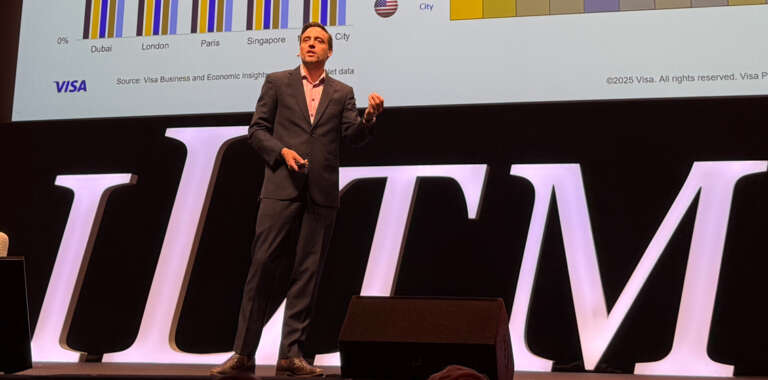
“Approximately 25% of Gen Z adults in the United States identify as LGBTQ. That means not only are a quarter of your Gen Z guests likely queer, but a similar percentage of your heterosexual guests may be travelling with LGBTQ children or grandchildren,” explained Simon Mayle, Event Director for RX Global, operators of ILTM and Proud Experiences.
“The business case for inclusion has never been clearer – and this is where the role of an informed, LGBTQ-savvy travel advisor becomes crucial. Advisors can bridge the gap between client needs and supplier offerings, guiding both parties toward more aligned, satisfying experiences.”
LGBTQIA+ Travellers Are High-Spenders
Beyond the increasing representation in the population, LGBTQIA+ travellers, according to research from travel company Arival, spend more than their counterparts on attractions (40% more), activities (25%) and tours (22%). Not only do they spend more on such experiences, but they also partake in more experiences per trip (seven, on average, compared to four among other travellers).
Data from the International Gay and Lesbian Travel Association (IGLTA) in 2023 found that the LGBTQ+ tourism market is estimated to be worth over US$200 billion annually. That number is assuredly larger now.
David Rappel, a travel advisor with Global Travel Collection, said, “Most of them are double income, no kids – they’re DINKS … they have a lot more disposable income to spend – on clothing, on a hotel, on travel.” He added, joking, that expenses are a lot less “when your child is a 15lb dog.”
In other words: this is a growing population of travellers who also spend more on travel experiences than non-LGBTQIA+ travellers.
The business case for inclusion never being clearer, indeed.
Stay tuned for Parts 2 and 3 in the coming weeks to learn about the unique challenges in selling LGBTQIA+ travel, the trends driving the segment, and tips for breaking into the market.